AI教程

AI提示库聚合全网优质 AI 教程,覆盖大模型实战、Prompt 工程、AI 工具上手等主题,从入门到进阶一站搞定。

其他 · 共 452
Becoming a Top

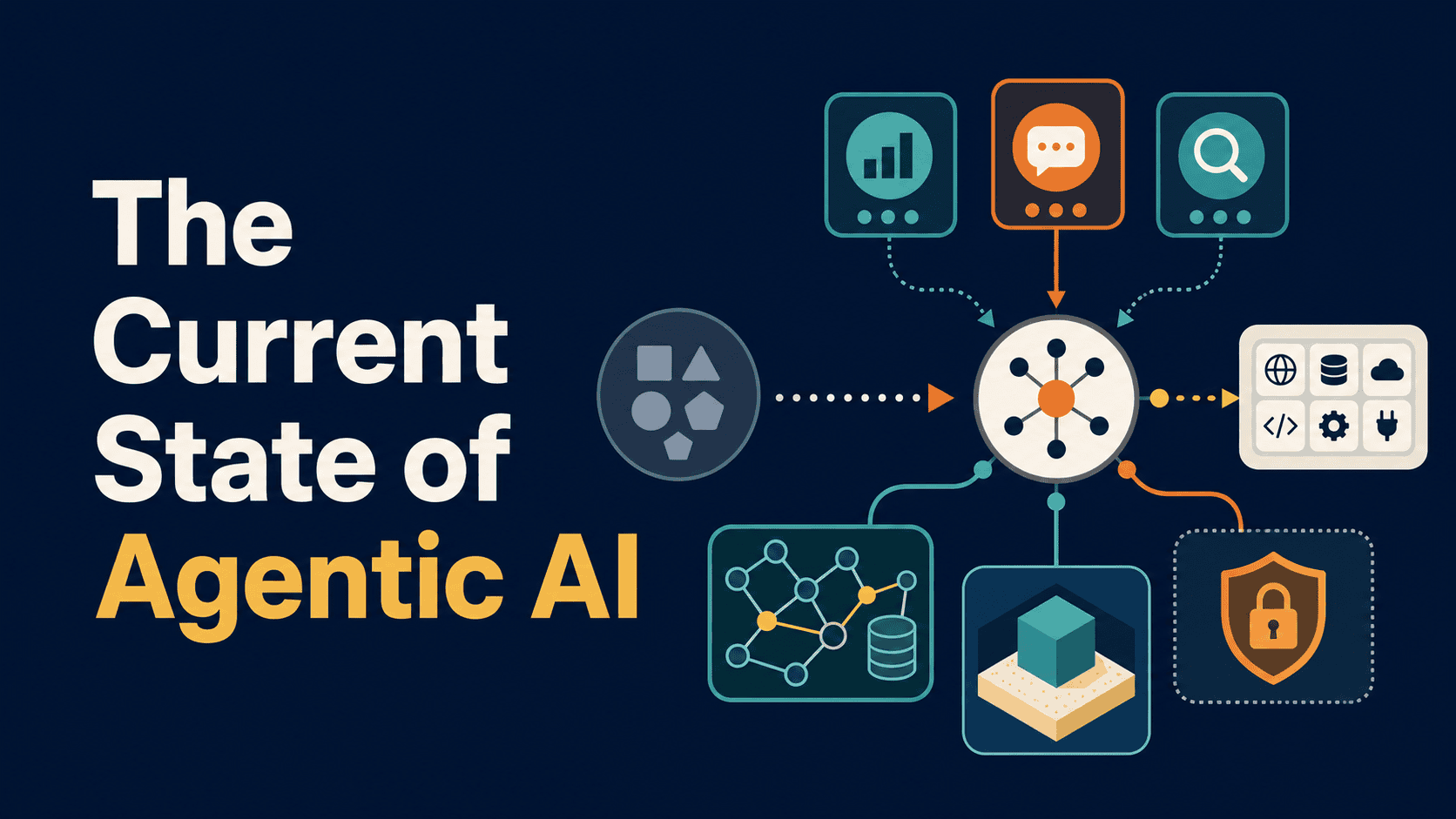
Becoming a Top 1% Hermes Agent User: The Complete Playbook No One Else Is Sharing

Last Updated on August 3, 2026 by Editorial Team Author(s): allglenn Originally published on Towards AI. Becoming a Top 1% Hermes Agent User: The Complete Playbook No One Else Is Sharing Three weeks into running Hermes Agent on a $5 VPS, I opened my terminal and it told me something I hadn’t asked for. It had noticed I kept re-explaining my staging deploy process every Friday, so it wrote itself a skill for it. After the lead, the article explains what makes Hermes Agent different—its closed learning loop that evaluates outcomes and writes reusable skills to disk—plus how to install it safely beyond a simple curl+bash, verify it with doctor/version checks, and configure providers and messaging gateways. It then dives into Hermes’ memory and skills systems (including the four-layer memory stack and the skill lifecycle), subagents and zero-context-cost pipelines, and scheduling that runs unattended in fresh sessions. The piece covers deploying Hermes as real infrastructure (e.g., systemd service on a VPS), production-grade security concerns (allowlists, approvals, file-write verification, sandboxing, credential handling, prompt injection defenses, and observability), and cost controls. It closes with a practical step-by-step example for building a daily engineering status digest, common mistakes to avoid, best practices for rollout, and a short “what to do next” section encouraging readers to run it long enough for the learning loop to become genuinely useful. Read the full blog for free on Medium. Join thousands of data leaders on the AI newsletter. Join over 80,000 subscribers and keep up to date with the latest developments in AI. From research to projects and ideas. If you are building an AI startup, an AI-related product, or a service, we invite you to consider becoming a sponsor. Published via Towards AI

🌐 其他 Towards AI · 2026-08-03 10:01:01 · 原文
ADLC Has Six De

ADLC Has Six Definitions and Zero Consensus — I Compared Every Major Framework

Last Updated on August 3, 2026 by Editorial Team Author(s): AIguru Originally published on Towards AI. ADLC Has Six Definitions and Zero Consensus — I Compared Every Major Framework created by GEMINI Ask six vendors what “Agentic Development Lifecycle” means and you’ll get six different phase counts, six different priorities, and at least two flatly contradictory claims about whether it’s even a new lifecycle at all. That’s not a hypothetical. I pulled every substantive ADLC framework published in the first half of 2026 — from a cloud consultancy, a security vendor, a systems integrator, a boutique dev shop, and an enterprise ops firm — checked whether Gartner or Forrester had stepped in to settle it, then lined all of it up side by side. They all use the same four-letter acronym. Almost nothing else about them agrees, and the analysts made it worse, not better. The real problem underneath the acronym Before picking this apart, it’s worth being fair to the underlying idea, because the problem it’s responding to is genuine. The classic Software Development Lifecycle assumes you can specify behavior at build time, test it before release, and expect it to run the same way in production as it did in staging. Agentic systems break that assumption in a specific way: they reason across context they don’t fully control, their outputs vary even given similar inputs, and small upstream changes compound into materially different downstream behavior. One preprint circulating on the subject — not yet peer reviewed, worth flagging — points to just how fast this shifted using SWE-bench Verified as a proxy: issue-resolution rates on that benchmark rose from under 2% to over 78% between October 2023 and April 2026. Whatever you call the practice of managing that shift, something in the SDLC does need to change. The question is whether “ADLC” actually names a coherent answer to that problem, or whether it’s a label six different companies are attaching to six different things they al
🌐 其他 Towards AI · 2026-08-03 09:31:01 · 原文
Building Reliab

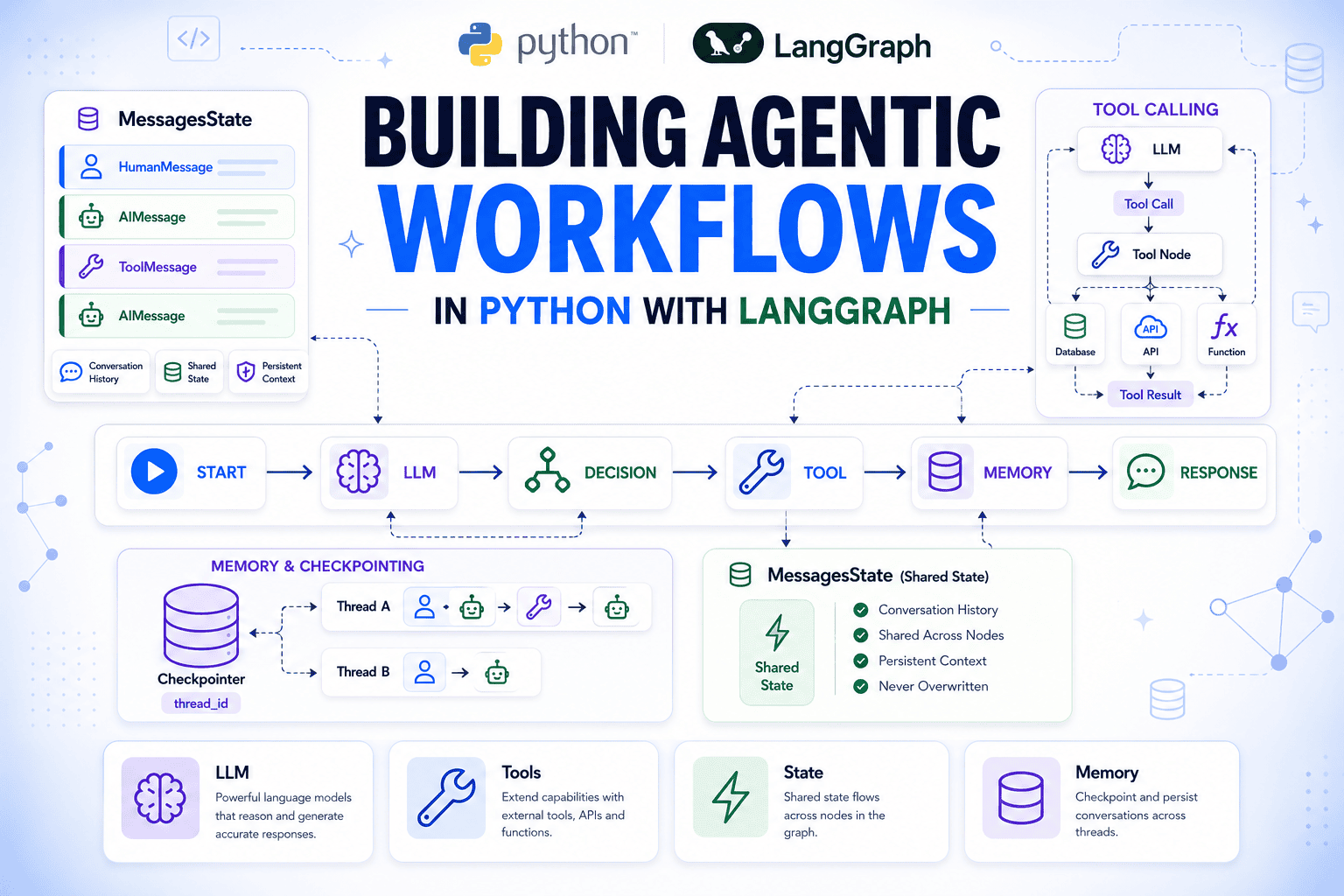
Building Reliable AI Agents with Tool Calling and Structured Output in 2026

Last Updated on August 3, 2026 by Editorial Team Author(s): CodeInsights Originally published on Towards AI. Why Tool Calling Matters More Than Ever Tool calling has become one of the most important capabilities for building production-grade AI agents. While early agents relied heavily on prompting and chain-of-thought reasoning, modern agents increasingly depend on structured tool usage to interact with external systems reliably. After the lead-in, the article explains why tool calling is essential in production—highlighting common failures of prompt-only agents such as hallucinated parameters, brittleness on multi-step tasks, inconsistent output formatting, and unreliable external API interaction. It then walks through practical implementation patterns for 2026: defining tool schemas with Pydantic, exposing tools via frameworks like LangChain, enforcing structured output to reduce parsing errors, and assembling a basic tool-calling agent workflow (e.g., with LangGraph). The author also covers robust error handling for tool failures and concludes with best practices and a recommended stack (orchestration, tool definitions, structured output models, LLM choices, and observability tools), emphasizing that reliable agents come from well-defined tools, strict schemas, and careful error handling rather than just better prompts. Read the full blog for free on Medium. Join thousands of data leaders on the AI newsletter. Join over 80,000 subscribers and keep up to date with the latest developments in AI. From research to projects and ideas. If you are building an AI startup, an AI-related product, or a service, we invite you to consider becoming a sponsor. Published via Towards AI
🌐 其他 Towards AI · 2026-08-03 09:01:01 · 原文
AI Fundamentals

AI Fundamentals: Understanding Activation Functions (Part 1)

Last Updated on August 3, 2026 by Editorial Team Author(s): The Build Log Originally published on Towards AI. AI Fundamentals: Understanding Activation Functions (Part 1) Let’s make a case for non-linearity in neural networks, and understand the Universal Approximation Theorem Stacking a hundred layers in a neural network without non-linear activation functions causes the entire architecture to suffer from linear collapse. Mathematically, every linear layer performs an affine transformation: a combination of matrix multiplication and vector addition, y = Wx + b. Because the composition of any number of affine transformations is itself just another affine transformation, a network with ten, a hundred, or a thousand linear layers simplifies directly into a single matrix operation: output = Wₑ · x + bₑ​​ Breaking the above equation down further: Layer 1: y₁ = W₁x + b₁​ Layer 2: y₂ = W₂y₁ + b₂​ Layer 3: y₃ = W₃y₂ + b₃​ Plugging each layer into the next: y₃ = W₃(W₂(W₁x + b₁) + b₂) + b₃​ Multiplying them: y₃ = (W₃W₂W₁)x + (W₃W₂b₁ + W₃b₂ + b₃)​ Instead of carrying those nested matrices around, group them into two variables: Wₑ = W₃W₂W₁​ (the effective overall weight matrix) and, bₑ = W₃W₂b₁ + W₃b₂ + b₃​ (the effective overall bias vector). The entire 3-layer network collapses right back into that same single-layer formula: output = Wₑ · x + bₑ Why does a network need to separate anything? Picture looking down at a map with a single small island surrounded entirely by ocean, then being handed a ruler and asked to draw one straight line that puts every bit of land on one side and every bit of water on the other. There’s no way to do it: any straight line drawn across that map cuts through both the island and the ocean around it. What’s needed instead is a nonlinear boundary that can wrap around the island and separate it from the surrounding ocean. That’s the intuition behind what a neural network learns. Rather than being limited to simple straight-line separations, neural
🌐 其他 Towards AI · 2026-08-03 08:31:01 · 原文
共 452 篇 · 第 30/31 页« 上一页12下一页 »